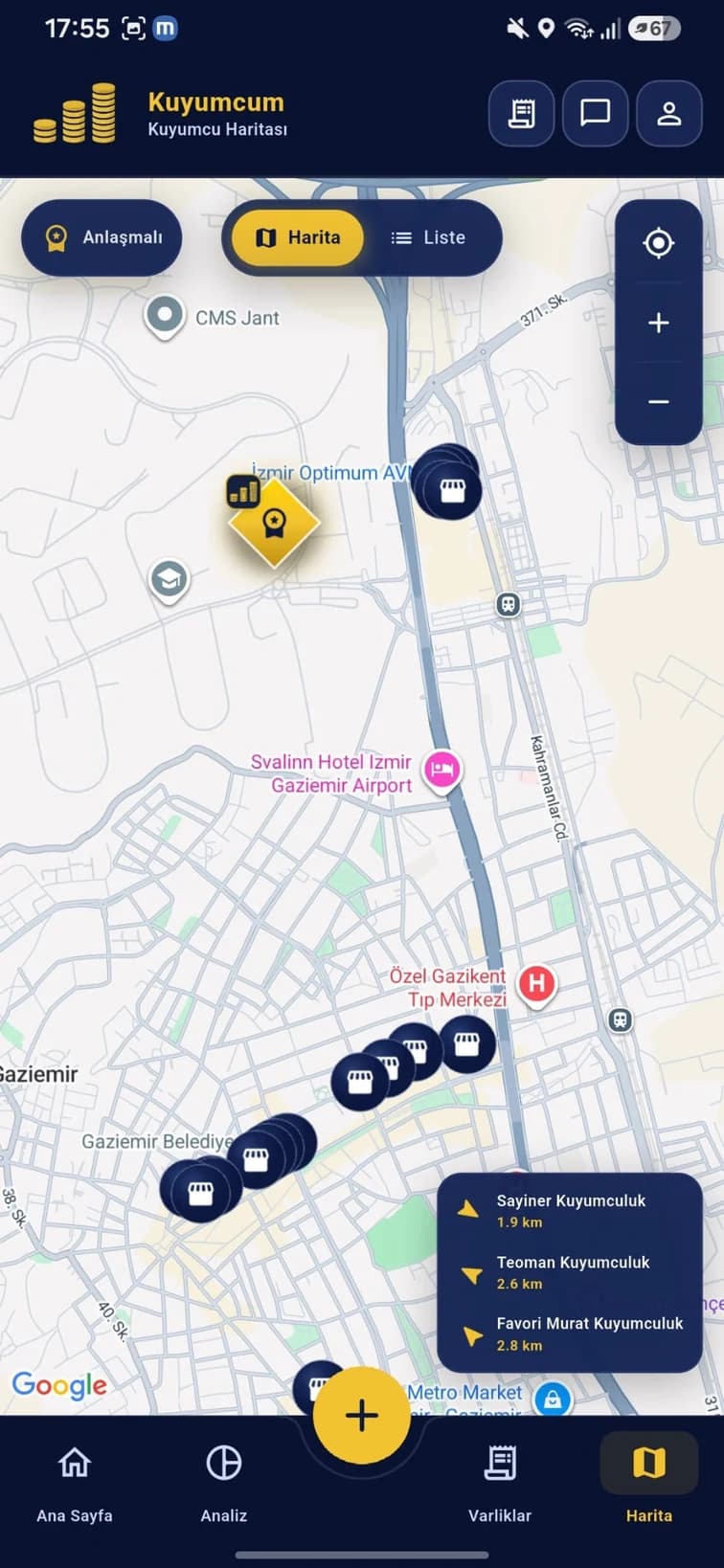
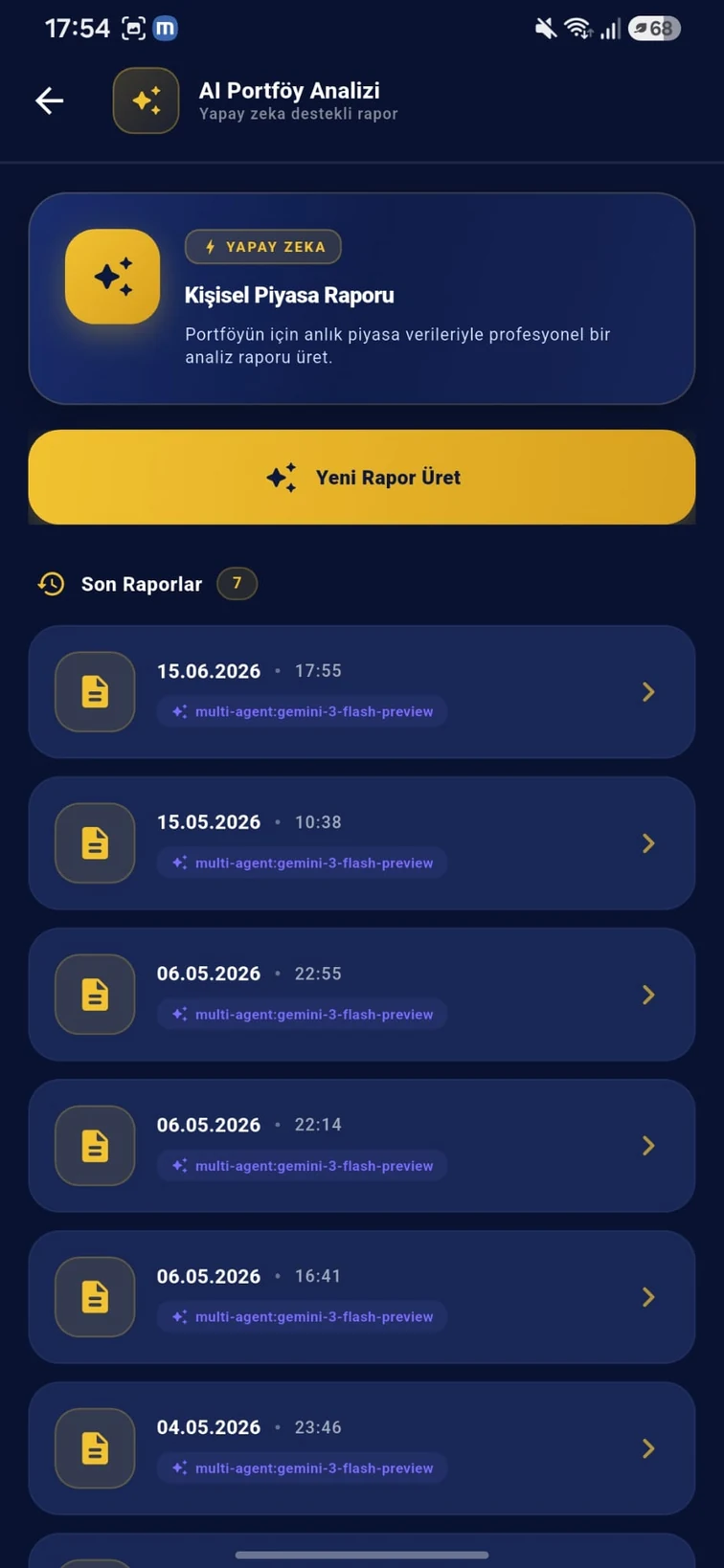
Bringing holdings into one view
Precious metals and foreign currency are often tracked across disconnected tools. Kuyumcum brings portfolio tracking, profit and loss analysis, price alerts, merchant discovery and reservations into a Flutter mobile ecosystem.
My contribution
I co-developed the full-stack application with Flutter, Dart and Firebase/Firestore. My AI work covers two layers: recognizing coins and gold from the camera on the phone itself, and multi-agent portfolio reports grounded in retrieved data.
Architecture and constraints
The mobile application connects portfolio and merchant workflows with Firebase/Firestore and Google Maps. AI-powered reports combine market data, recent news, historical context and macroeconomic signals to produce portfolio risk insights.
The engineering challenge is keeping those different sources useful within a coherent product flow. A report needs context from the user's holdings as well as the information retrieved for it.
On-device recognition
The camera identifies coins and gold items without a server round trip: a YOLO11n model trained in Python on ten classes is exported to TensorFlow Lite and runs in the Flutter app through flutter_vision.
Multi-agent reports
Portfolio reports are written by Firebase Cloud Functions with Gemini. Four analyst agents take a bull, bear, macroeconomic and risk view of the holdings, and a synthesizer combines their findings into one report. Their context comes from hybrid retrieval, BM25 and dense search with re-ranking, plus a separate retrieval layer for macroeconomic sources.
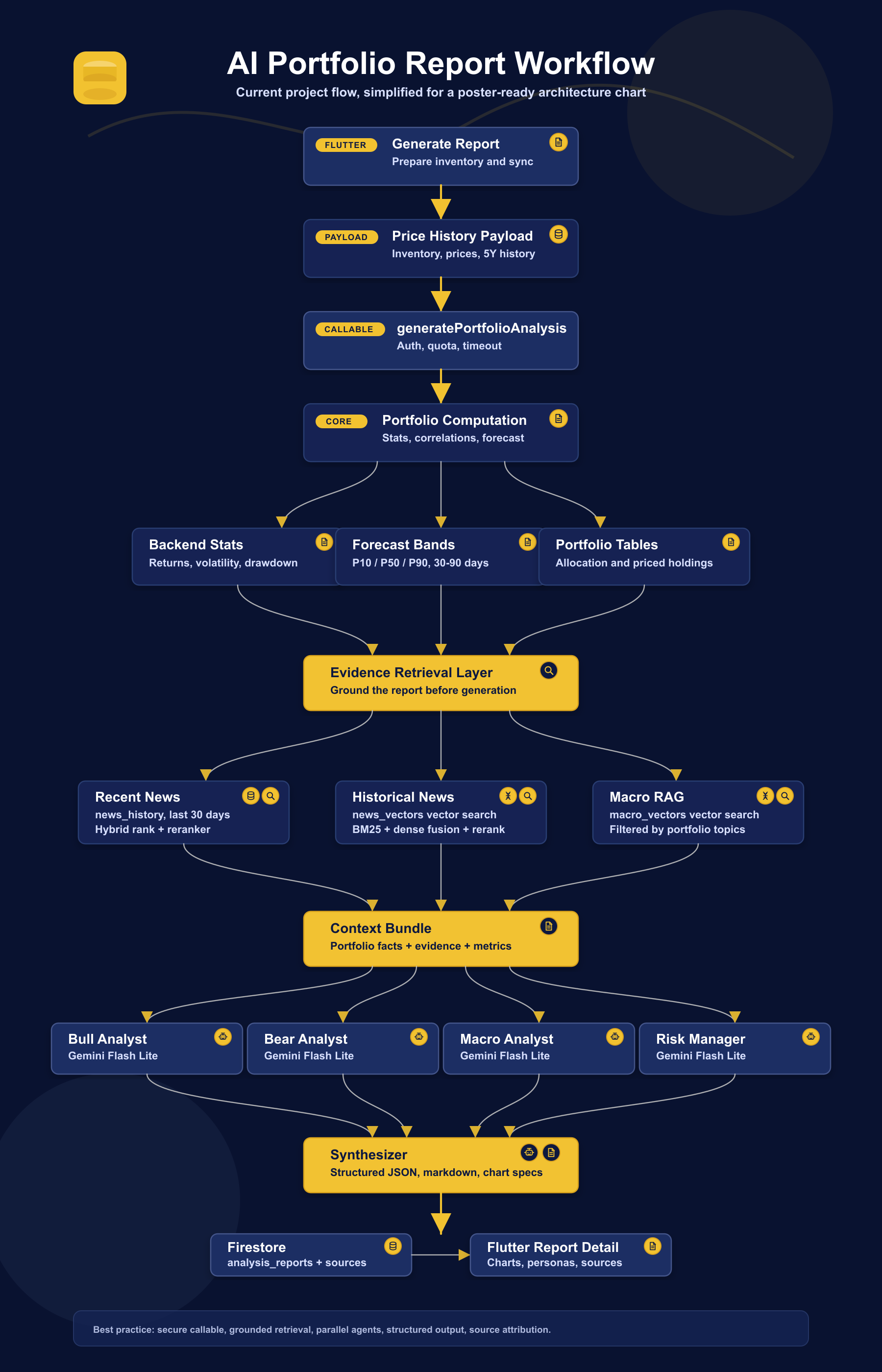
The chart, step by step
- The Flutter app prepares the user’s inventory and sends it with current prices and five years of price history.
- A callable Cloud Function checks authentication, quota and timeout before any work starts.
- Portfolio computation produces three inputs: return, volatility and drawdown statistics; P10, P50 and P90 forecast bands for 30 to 90 days; and allocation tables with priced holdings.
- An evidence retrieval layer grounds the report before generation. It reads recent news from the last 30 days with hybrid ranking and a re-ranker, historical news through vector search with BM25 and dense fusion and re-ranking, and macroeconomic sources through vector search filtered by the portfolio’s topics.
- A context bundle combines the portfolio facts, the evidence and the metrics.
- Four agents on Gemini Flash Lite read the bundle in parallel: a bull analyst, a bear analyst, a macro analyst and a risk manager.
- A synthesizer combines their findings into structured JSON, markdown and chart specifications.
- The report is stored in Firestore with its sources, and the Flutter report screen shows it with charts, analyst personas and sources.
What I can demonstrate
The implemented scope includes portfolio tracking and AI features described above. No adoption, revenue or model-quality metric is claimed here. The source code is not shared publicly through this portfolio.
Limitations
Asset recognition and generated reports can be wrong. The portfolio does not establish investment performance or validate financial recommendations. The screenshots show merchant discovery and the AI report list. They do not establish adoption or financial performance.